


Published January 2026 · Last updated: 20 August 2026
The Reykjanes Eruption Timeline (2021–2026)
Current status (20 August 2026): No eruption is under way on the Reykjanes Peninsula. The last eruption ran from 16 July to 5 August 2025. Since then roughly 29.1 million cubic metres of magma have accumulated beneath Svartsengi, and the Icelandic Meteorological Office considers a new dike intrusion into the Sundhnúkur crater row — possibly followed by an eruption — the most likely outcome. Seismic activity near Grindavík remains low. Keflavík Airport and the rest of Iceland are unaffected.
After more than 800 years of silence, Iceland’s Reykjanes Peninsula woke up in March 2021. That first fissure marked the beginning of something remarkable, a volcanic era that has reshaped this rugged landscape and captivated thousands of visitors from around the world.
For anyone planning a trip to Iceland, understanding the Reykjanes eruption history gives you context for one of the planet’s most accessible displays of volcanic power. This timeline walks through every eruption from 2021 to today, showing you what makes this volcanic episode so remarkable.
Why the Reykjanes Peninsula?
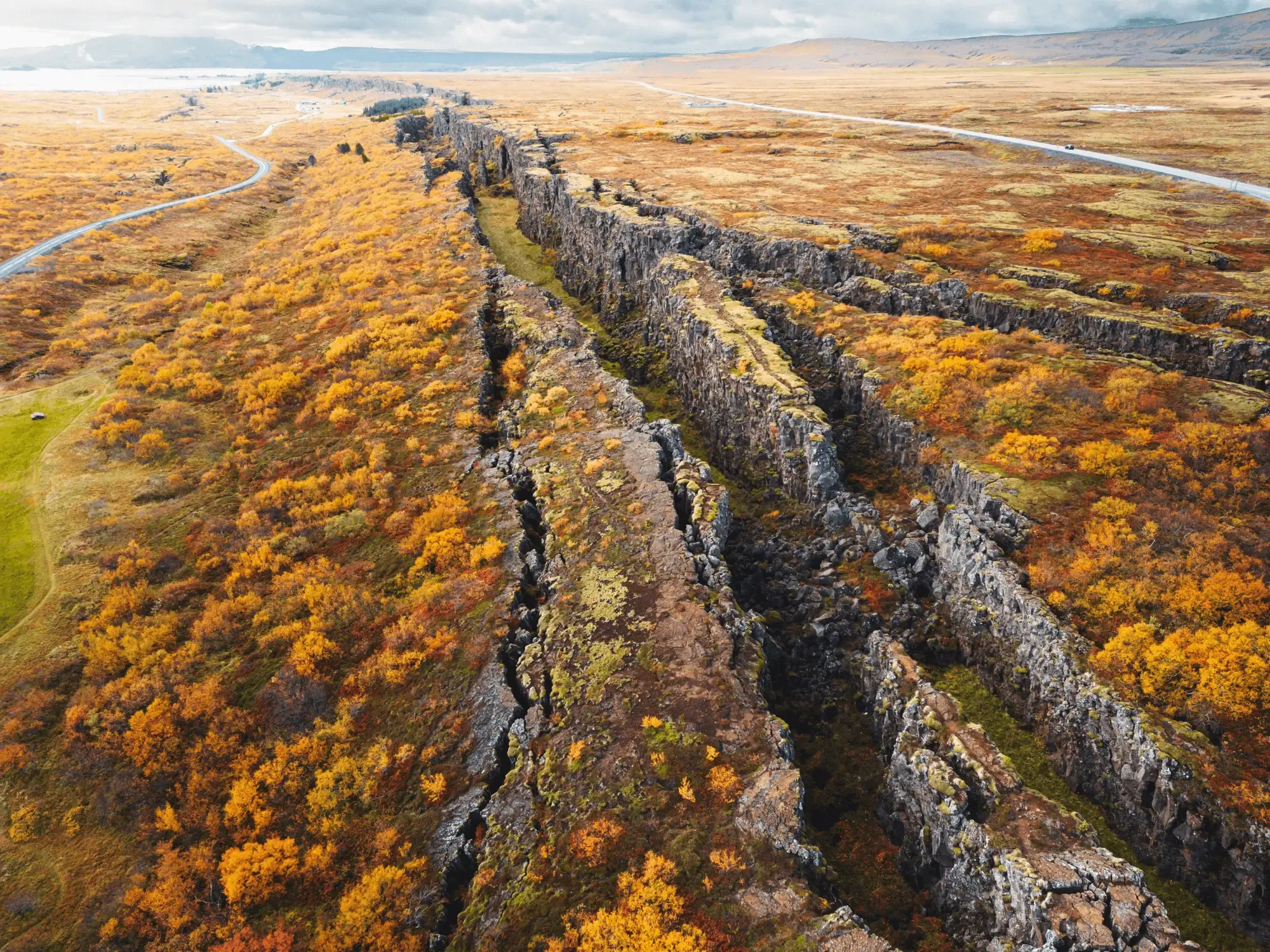
The Reykjanes Peninsula sits in a unique spot on Earth. It’s the only place where the Mid-Atlantic Ridge, that massive underwater mountain range separating the North American and Eurasian tectonic plates, actually pokes above the ocean. This creates perfect conditions for volcanic activity. As the plates slowly drift apart, magma wells up from deep in the Earth’s crust to fill the gap.
When that first Reykjanes eruption started in 2021, scientists knew right away they were watching the start of something big, a volcanic cycle that could keep going for decades, maybe even centuries.
The Eruptions
March 2021: The Awakening at Fagradalsfjall
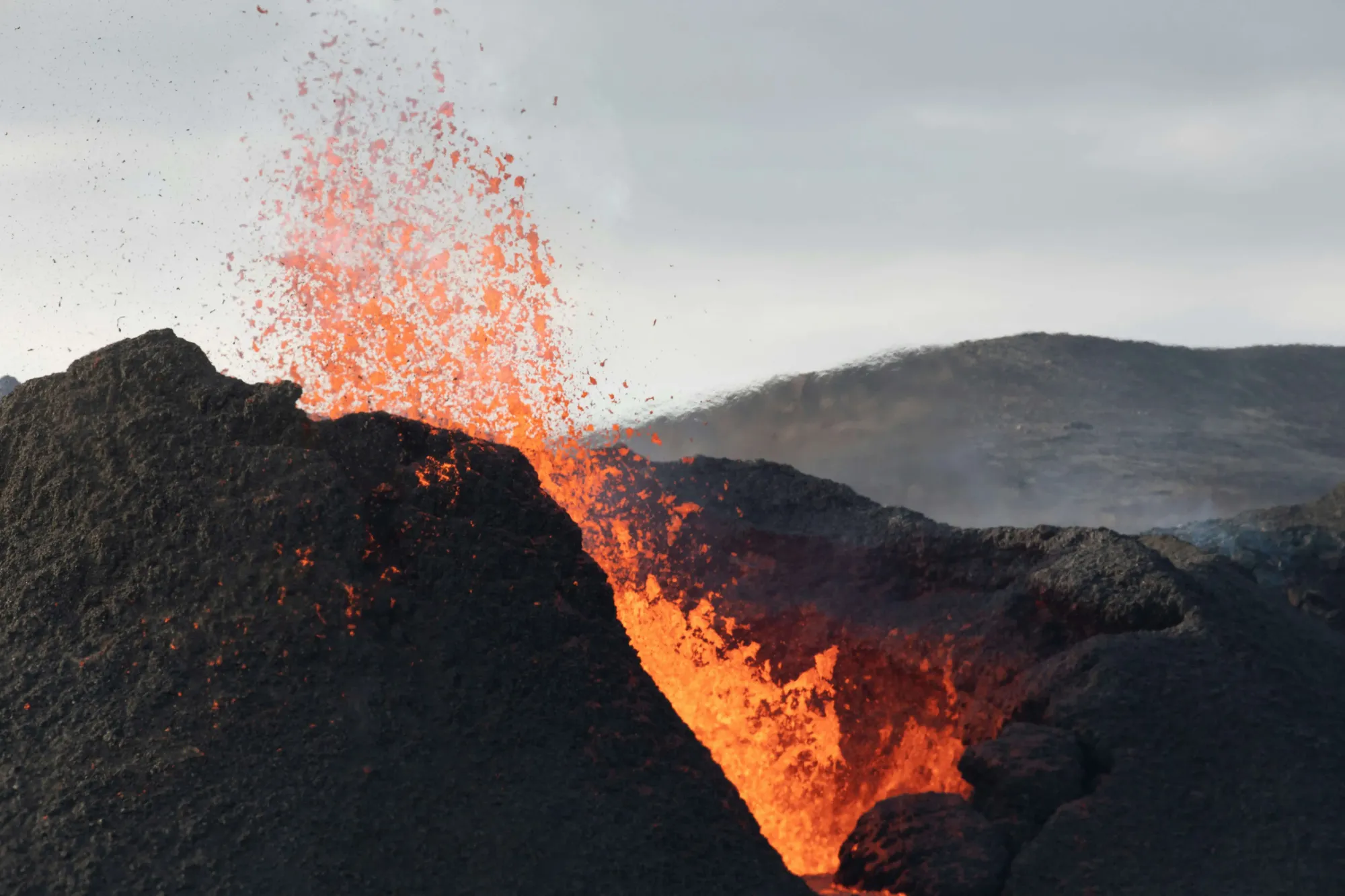
The warning signs came in late February 2021 when thousands of small earthquakes rattled the Reykjanes Peninsula. Then, on March 19, it happened. A fissure cracked open in the Geldingadalir valley, just south of Fagradalsfjall mountain; the peninsula’s first eruption in over 800 years had begun.
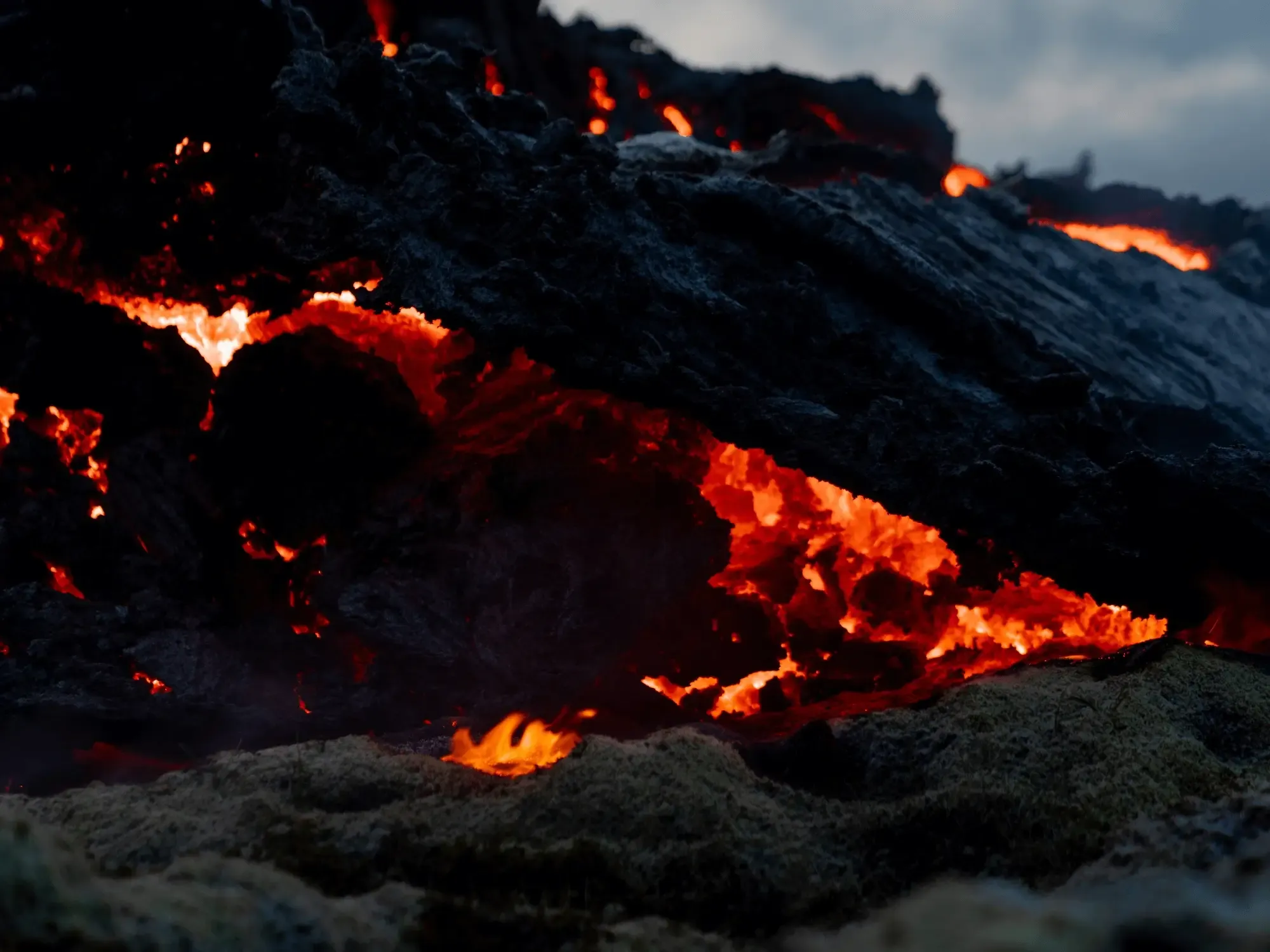
This initial Reykjanes eruption wasn’t like your typical volcanic event. Lava flowed steadily but slowly from several vents, creating fountains that shot molten rock dozens of meters into the air. Because it happened in a remote valley, far from any towns, people quickly nicknamed it a “tourist eruption.” Hikers could actually walk close enough to feel the heat and watch lava flowing right in front of them.
Over six months, five different vents opened, though eventually only one remained active. By September 2021, a volcanic cone had grown to 334 meters above sea level. The eruption finally stopped on September 18, leaving behind a dramatic lava field and a new landmark that would draw thousands of visitors in the years ahead.
August 2022: Return to Meradalir
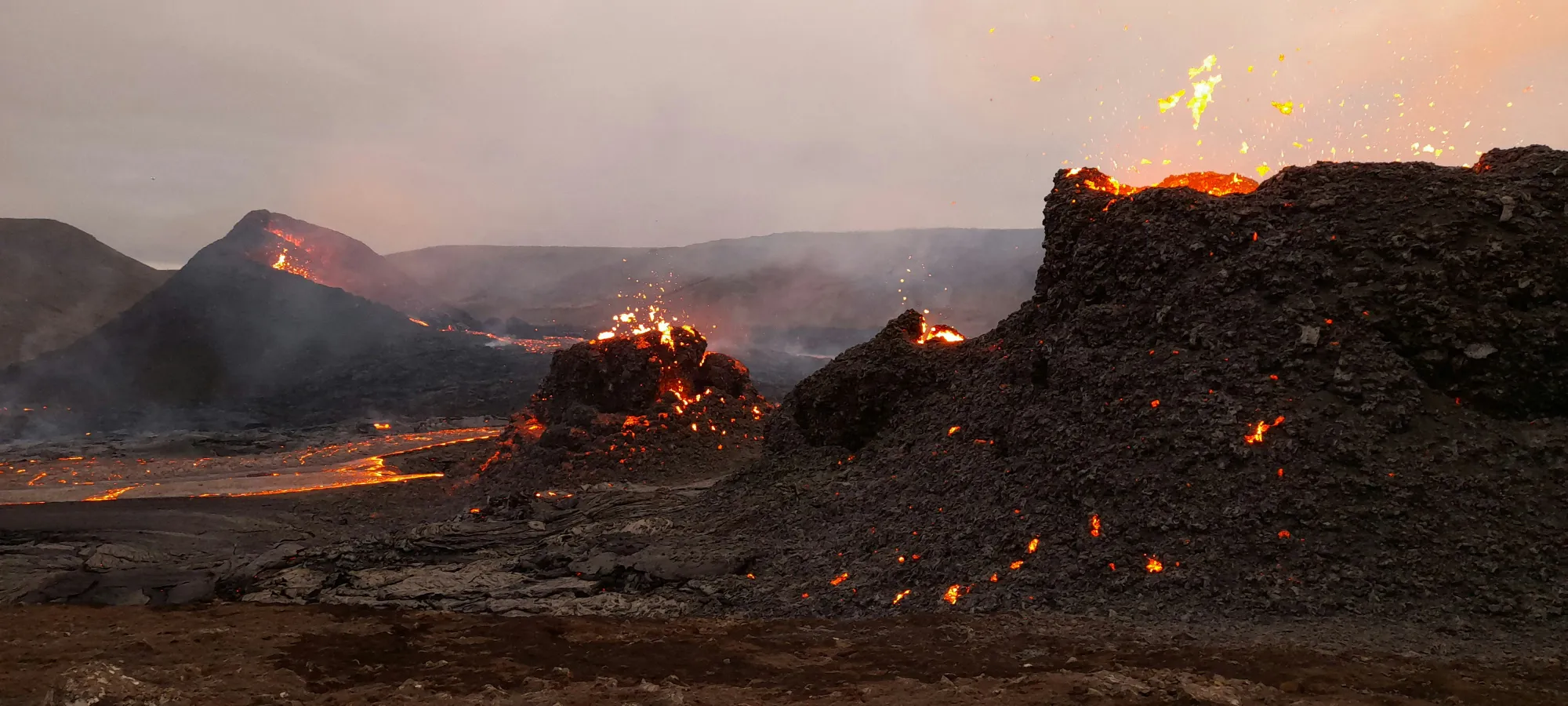
After almost a year of quiet, the Fagradalsfjall system came back to life on August 3, 2022. This time, the fissure opened in the neighboring Meradalir valley. The pattern felt familiar; weeks of increasingly intense earthquakes, then magma breaking through to the surface.
This second Reykjanes eruption pumped out roughly 12 million cubic meters of lava before stopping on August 21. Just under three weeks total, considerably shorter than the 2021 eruption, but still spectacular enough to bring visitors from around the globe.
July 2023: Litli-Hrútur Emerges
Just 11 months after Meradalir went quiet, the Fagradalsfjall system erupted again. On July 10, a 900-meter fissure opened near Litli-Hrútur mountain. After several days of earthquake swarms signaling magma moving beneath the surface, lava started flowing once more.
This eruption lasted nearly a month, until August 5. By now, both locals and visitors were starting to realize the peninsula had entered a new phase of sustained volcanic activity.
December 2023: The Shift to Sundhnúkur
Everything changed on December 18, 2023; after months of unprecedented seismic activity, more than 20,000 earthquakes, a massive fissure opened along the Sundhnúkur crater row. Unlike previous eruptions, this one hit much closer to the small fishing town of Grindavík. The fissure stretched nearly four kilometers.
The eruption lasted only three days, ending on December 21, but it fundamentally changed how people viewed what was happening. This hit close to home. Grindavík was evacuated as a precaution, and crews rushed to build massive earth barriers to protect critical infrastructure, including the Svartsengi geothermal power station and nearby roads.
January 2024: A Close Call
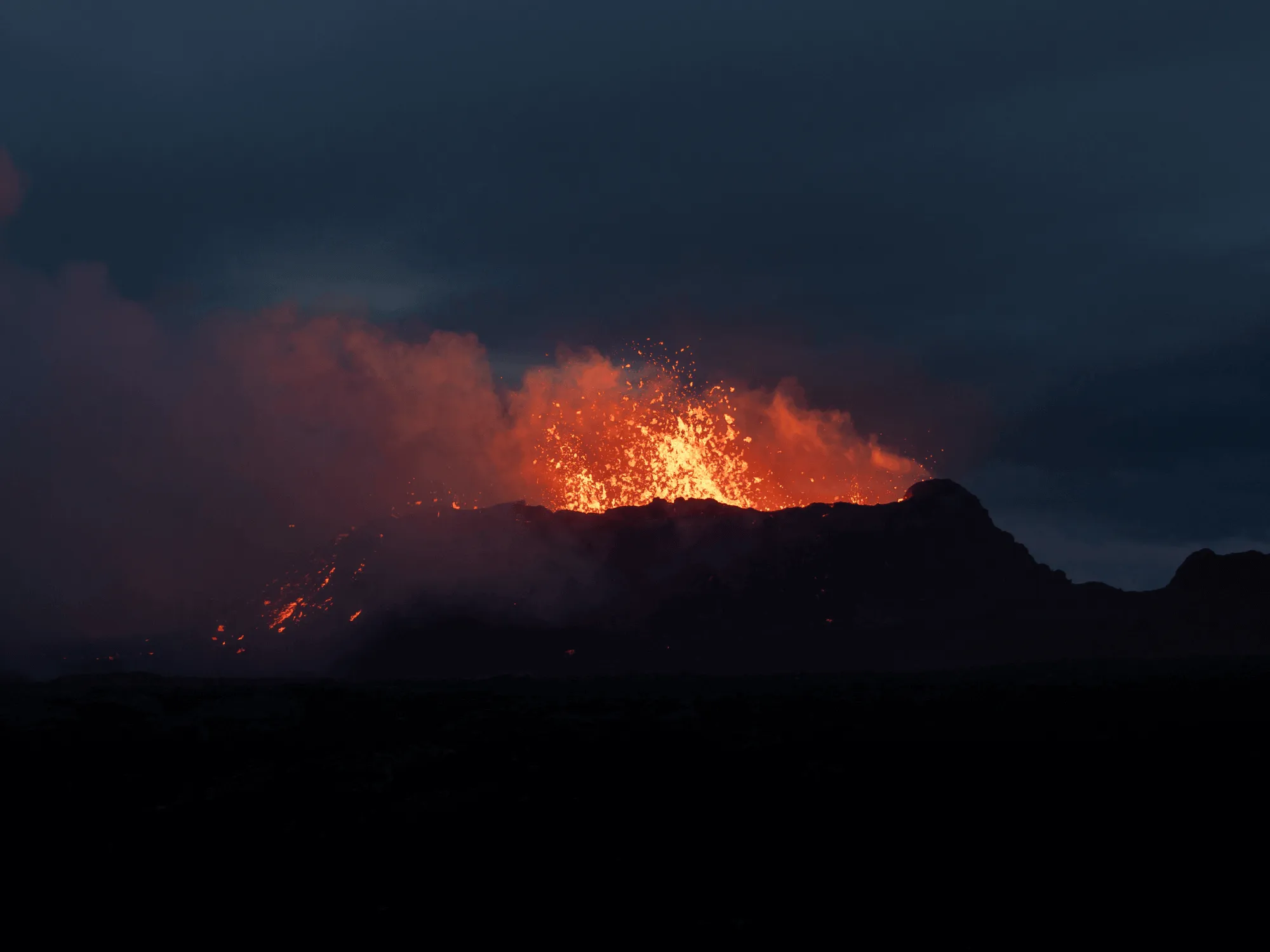
Barely a month later, on January 14, 2024, another fissure opened dangerously close to Grindavík, less than 100 meters from the town’s outermost houses. Early that morning, lava fountains lit up the sky. Fortunately, those hastily built defensive barriers worked, diverting most of the lava flow away from town. It could have been much worse.
The eruption lasted about 2 days before activity dropped off on January 15, and it officially ended the next day. This was a sobering moment for Iceland. The Reykjanes eruption series was no longer just a tourist attraction, it posed real risks to people and property.
February 2024: The Hot Water Crisis
On February 8, 2024, yet another eruption began along the Sundhnúkur crater row. A three-kilometer fissure opened following intense earthquake activity near Grindavík, triggering evacuations of both the town and the famous nearby Blue Lagoon.
While this eruption was relatively brief, about two days, it caused serious disruption. Flowing lava damaged a critical hot-water pipeline from the Svartsengi geothermal power station, leaving more than 26,000 residents without heating or hot water in the middle of winter. Emergency crews worked around the clock to build a replacement pipeline, but it still took four cold days before hot water service came back.
March–May 2024: The Longest Eruption
On March 16, 2024, following a swarm of small earthquakes, a new fissure about 2.5 kilometers long opened up. This would become the longest eruption in the entire series, an extraordinary 54 days, lasting until May 8.
The start was dramatic as lava flowed rapidly in multiple directions. The protective earth barriers initially worked, diverting lava away from critical infrastructure, though the flow eventually overwhelmed one section and flooded into a mine, making it unusable. Despite lasting nearly two months, lava flow rates dropped dramatically after the first week, settling into a steady but lower intensity.
May–June 2024: The Largest Lava Field
Before the March eruption even finished, geologists detected signs of magma accumulating again beneath Svartsengi. On May 29, after intense seismic activity, another fissure opened along the Sundhnúkur crater row.
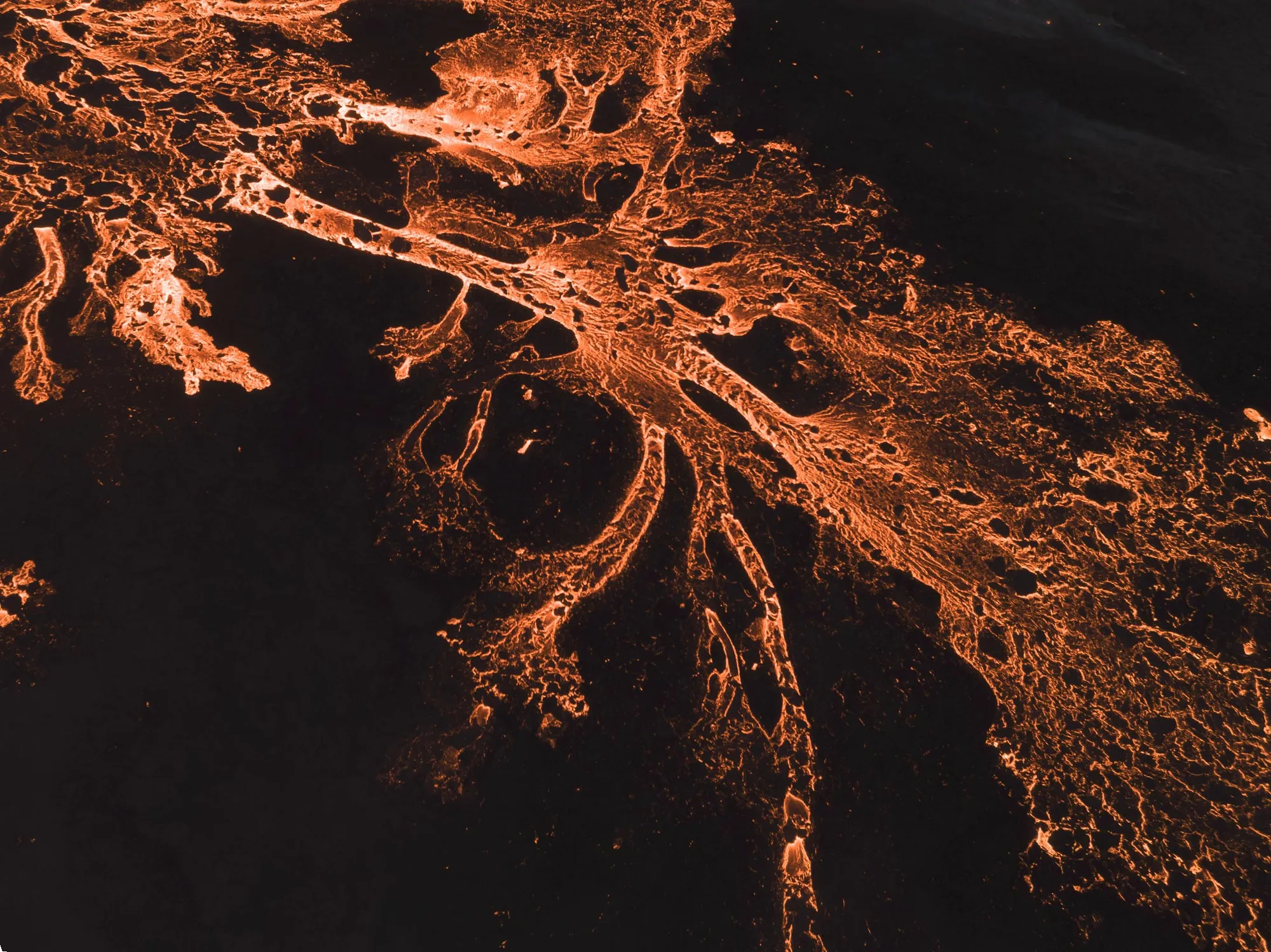
This eruption turned out to be the most voluminous of the Sundhnúkur series. Lava fountains reached heights of 50 meters, and the initial flow rate peaked at an extraordinary 1,500 to 2,000 cubic meters per second. The eruption continued for 24 days, ending on June 22.
By the time volcanic activity ended, this Reykjanes eruption had produced the largest lava field in the entire series, both in volume and area. The massive flow threatened both Grindavík and the main road, though defensive barriers once again proved their worth in protecting most infrastructure.
August–September 2024: Venturing North
On August 22, another eruption began along the Sundhnúkur crater row. This time, the fissure opened farther north than in previous events, initially stretching 4 kilometers before narrowing to about 2. A second, smaller one-kilometer fissure also formed.
This eruption stood out for being the northernmost in the entire series. The lava flows approached areas that had been used as military training grounds by the U.S. Army after World War II, raising concerns about potential unexploded artillery. Authorities issued stern warnings to hikers: stick to marked trails and avoid restricted zones. The eruption lasted 14 days, ending on September 6.
November–December 2024: Record Volume
After a 77-day gap, the longest stretch between Sundhnúkur eruptions, volcanic activity resumed on November 20 when lava fountains rose along the fissure, and flows spread both east and west. A volcanic plume climbed to two kilometers above sea level, briefly raising the aviation color code to red before being downgraded to orange within 35 minutes.
This eruption lasted until December 8, for a total of 18 days. Despite its length, it produced the second-largest volume of lava in the entire Sundhnúkur series. Remarkably, even with the scale of the eruption, it caused no disruption to daily life, flights, or major infrastructure. The protective measures and evacuation protocols were clearly working.
April 2025: A Brief Flare
The 11th eruption on the Reykjanes Peninsula began on April 1, 2025, following the most significant ground uplift recorded beneath Svartsengi since the cycle started. After a strong earthquake swarm that morning, magma carved a path more than ten kilometers underground before breaking through.
The entire event lasted less than 24 hours, producing only about 0.4 million cubic meters of lava, one-sixth the volume of the second-smallest eruption in the series. Small, but a reminder that the volcanic system remains very much active.
July–August 2025: The Most Recent Eruption
The most recent Reykjanes eruption began on July 16, 2025, when a fissure measuring about 700 to 1,000 meters opened along the Sundhnúkur crater row. This was the 9th eruption in the Sundhnúkur system and the 12th on the peninsula since March 2021 — and it remains the most recent eruption as of August 2026.
Precautionary evacuations were carried out at the Blue Lagoon and in Grindavík, following protocols refined over 2 years. Like earlier eruptions, seismic tremors and ground deformation gave advance warning.
The eruption continued for 21 days, finally ending on August 5. During that time, the lava field covered 3.3 square kilometers with an estimated volume of 26.8 million cubic meters. While smaller than some previous events, it marked an encouraging development: for the first time since the Sundhnúkur eruptions began in December 2023, authorities established a hiking path along the edge of the lava field with two designated observation points.
August 2025 to Today: The Long Pause
The eruption that ended on 5 August 2025 turned out to be the last one for a while. As of August 2026, more than a year has passed without a new eruption — the longest quiet period since the Sundhnúkur series began in December 2023.
Quiet does not mean finished. Magma has been collecting beneath Svartsengi continuously since the 2025 eruption ended. The Icelandic Meteorological Office put the accumulated volume at roughly 29.1 million cubic metres in its 18 August 2026 assessment, with the rate described as slow but steady. For comparison, previous eruptions in the series have been triggered at accumulated volumes well below that figure.
The IMO’s assessment is that the most likely next step is a magma intrusion travelling from Svartsengi into the Sundhnúkur crater row, which may or may not reach the surface. Seismic activity along the crater row and near Grindavík has stayed low throughout the pause.
What has changed is how much warning there would be. Based on the previous twelve events, the IMO expects between about 20 minutes and just over four hours between the first clear signals and an eruption breaking the surface. That is the reason evacuation protocols for Grindavík and the Blue Lagoon stay in place even during long quiet periods.
What’s Next for Reykjanes?
The long-term outlook has not changed: the Reykjanes Peninsula has entered a new eruptive period that geologists expect to continue for decades, possibly centuries. Historically these cycles run in pulses of activity separated by quiet years, so a twelve-month pause fits the pattern rather than contradicting it.
The Icelandic Meteorological Office reviews its hazard assessment for the area regularly. The current assessment runs to 30 September 2026 and is updated whenever conditions change.
For visitors, the practical takeaway is simple: there is nothing erupting to go and see right now, but the landscape left behind by fifteen months of activity is extraordinary and fully accessible, and any new eruption would be announced quickly and clearly by Icelandic authorities.
Visiting the Reykjanes Eruption Sites
With no eruption currently under way, what the peninsula offers in 2026 is the aftermath: fresh lava fields, new craters and a coastline that looks measurably different than it did in 2021.
The Fagradalsfjall sites at Geldingadalir, Meradálir and Litli-Hrútur remain accessible on marked hiking trails, and these are the most rewarding for casual visitors because the terrain has settled and the trails are established. Weather is the main constraint rather than volcanic risk, and conditions in the highlands change fast.
Following the 2025 eruption, authorities established a hiking route along the edge of the Sundhnúkur lava field with two designated observation points. This was the first formal public access to a Sundhnúkur eruption site.
Grindavík is open, though the town remains largely uninhabited after the repeated evacuations. Guided tours of the town and the surrounding defensive barriers have operated since November 2024. The Blue Lagoon is operating normally.
Before you go, check current conditions with the Icelandic Meteorological Office and safetravel.is. During active eruptions authorities close roads and restrict access to specific zones, and those restrictions can appear with a few hours’ notice.
The rest of Iceland is unaffected. Keflavík International Airport, despite sitting on the peninsula, has not been disrupted at any point in this eruption series. Unlike the 2010 Eyjafjallajökull eruption, which produced ash clouds that grounded flights across Europe, these are effusive fissure eruptions that produce lava rather than ash, so they pose no threat to air travel.
The Human Story Behind the Eruptions
While the Reykjanes eruption series captures headlines, it’s worth remembering the human side of these events. The residents of Grindavík, a fishing community of about 3,000 people, have faced repeated evacuations and uncertainty about their future. Some homes have been destroyed. Many residents haven’t been able to return to their properties for long stretches. Some residents have decided to permanently move from Grindavik.
The Blue Lagoon, one of Iceland’s most visited attractions, has closed temporarily during several eruptions as a safety precaution. Workers at the Svartsengi geothermal power station have shown remarkable dedication, maintaining critical infrastructure with volcanic activity literally at their doorstep. Engineers and construction crews have worked tirelessly to build and maintain protective barriers, replace damaged pipelines, and keep life across the peninsula running as normally as possible.
A Living Landscape
With close to 30 million cubic metres of magma now pooled beneath Svartsengi, the next chapter of the Reykjanes eruption saga awaits. Whether you’re planning your first visit to Iceland or coming back to see how the landscape has changed, the volcanic wonders of Reykjanes offer an unforgettable experience. In Reykjavík, you could always visit Volcano Express to get a front-row seat to Earth’s creative and destructive power, all set against Iceland’s stunning natural beauty.
Volcanic activity figures in this article come from the Icelandic Meteorological Office (Veðurstofa Íslands), which monitors the Reykjanes Peninsula continuously and publishes regular assessments at en.vedur.is.
This article is part of our complete guide: Eruption Updates & Peninsula Safety.